British manufacturer collaborates on potential sustainable alternative to concrete
By Manufacturing Writer • Posted in Manufacturing
A Made in Britain-accredited terracotta manufacturer is playing a key role in developing materials that could one day provide a more sustainable alternative to concrete.
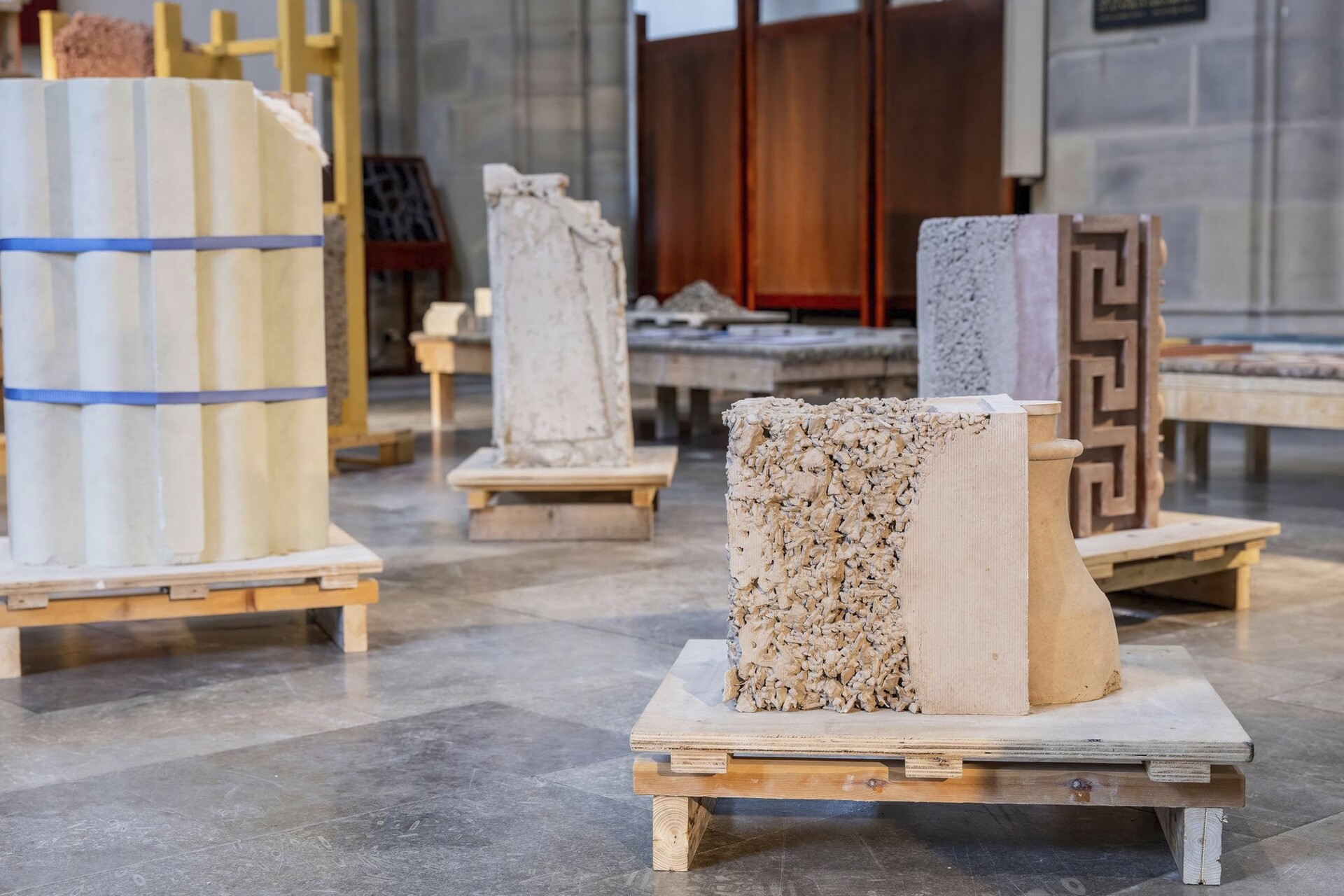
Darwen Terracotta, one of the first manufacturers to achieve the Made in Britain Environmental and Social Value (ESV) Certification, is collaborating with designer Lewis Jones on Poured Earth, a project exploring low-carbon construction materials.
Developed through the National Festival of Making's Art in Manufacturing programme and Lewis' design practice, Matter at Hand, the project is investigating a range of unfired, clay-based materials that could potentially replace concrete in some applications, significantly reducing the environmental impact of building.
Two years after the partnership began, materials developed through Poured Earth were showcased at the National Festival of Making in Blackburn on 4 and 5 July. Both Darwen Terracotta and Matter at Hand are based in the town.
Concrete production accounts for around 8% of global greenhouse gas emissions, with approximately 140kg of carbon dioxide produced for every cubic metre of structural concrete. By contrast, the unfired clay materials being developed through Poured Earth can be produced with close to no carbon emissions.
Simona Weldon, Marketing Manager at Darwen Terracotta, said:
"By supporting Poured Earth, we hope that it will give the information required to create more sustainable homes and buildings around us. We are already working towards this by using terracotta in restoration and new buildings, but Lewis is taking this one step forward, finding other ways of using clay, mixing it with other products and creating better homes for future generations.
"Our involvement in the project complements the Made in Britain ESV Certification, reinforcing our mission to lead by example and encourage others in the sector to take action for a better future. It represents a meaningful step in the right direction towards sustainable construction.
"Sustainability is a core principle at Darwen Terracotta, so we're always keen to support projects that reinforce our efforts and work towards a better environment."
Darwen Terracotta is the UK's largest manufacturer of architectural terracotta, with a history dating back to the late 1800s. Last year, the company began a residency with Lewis Jones, providing Matter at Hand with workshop space at its factory and access to its products to test and develop ideas for the Poured Earth project.
Months later, the company's commitment to sustainability was recognised when it became one of the first businesses to achieve Made in Britain's Environmental and Social Value (ESV) Certification.
Developed in collaboration with MAP UK & International, the certification enables organisations to demonstrate their environmental and social value credentials, helping them stand out in a competitive marketplace.
Available to all 2,250-plus Made in Britain members, it provides a practical and accessible way for manufacturers to demonstrate and promote their positive environmental and social impact.
John Pearce, CEO of Made in Britain, said:
"It's brilliant to see a Made in Britain member making such a positive impact in the journey towards making manufacturing and construction more sustainable.
"We're all about promoting sustainable growth and the ESV Certification is designed to support that, helping companies to do better business, build resilience and achieve long-term, 'good' growth.
"I look forward to seeing the progress of Darwen Terracotta's partnership with Poured Earth, and how its research and products can be used to improve the quality of construction materials for future generations."
The National Festival of Making attracts more than 40,000 visitors each year and features over 150 artists and makers across more than 25 venues. The programme combines art, manufacturing, film, making and community engagement.
Its Art in Manufacturing commissioning programme pairs artists with manufacturers and makers across Lancashire and beyond. These collaborative residencies result in installations, films and participatory experiences showcased throughout the festival weekend.
Ahead of the main event, an industry conference brings together professionals from the arts, design, architecture, placemaking and manufacturing sectors, highlighting Lancashire's position as a centre of UK manufacturing and innovation.
The festival is organised by Festival of Making CIC, a not-for-profit arts and culture organisation based in Blackburn.
For more information about Made in Britain and to discover verified UK manufacturers, visit www.madeinbritain.org.